
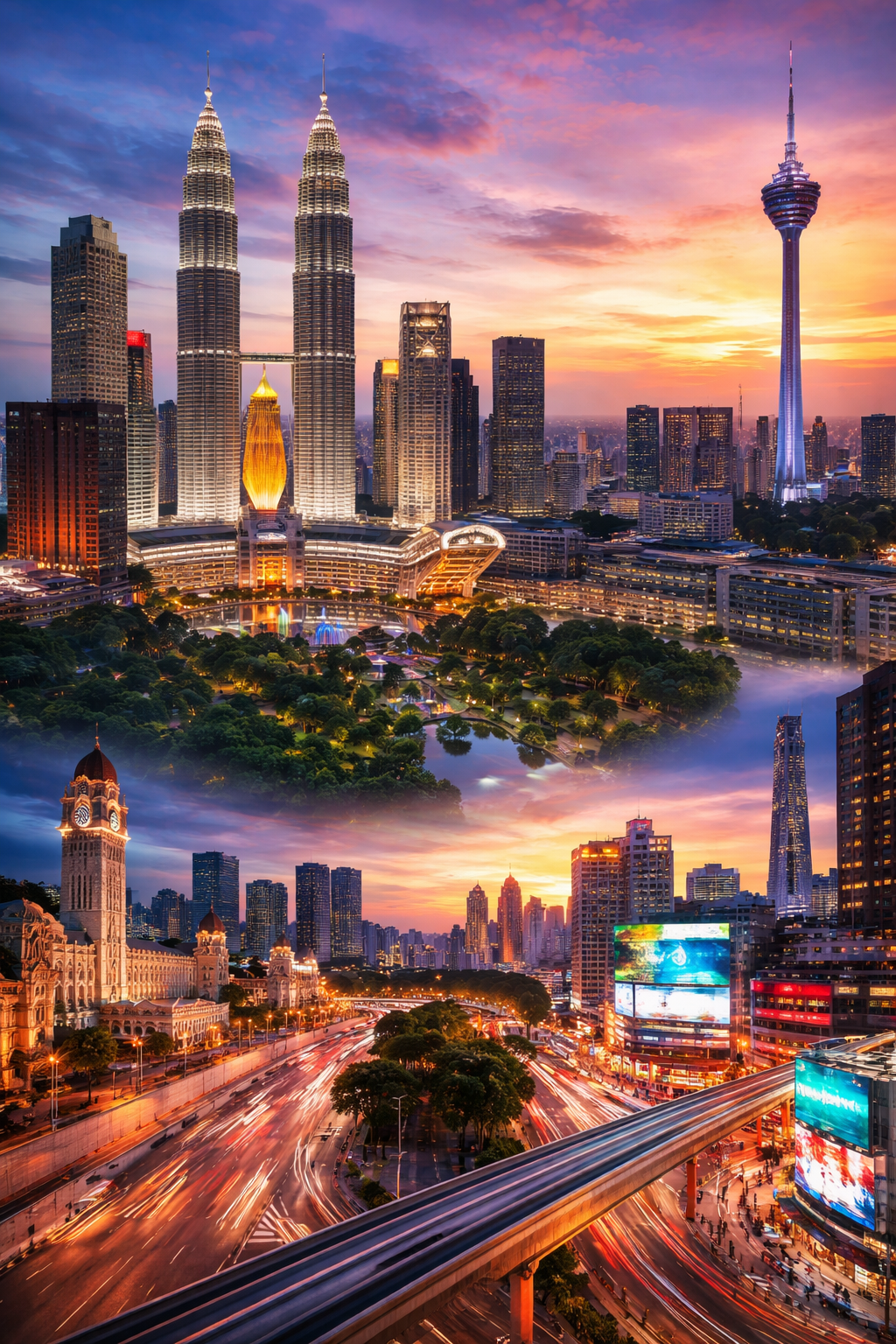
The Petronas Twin Towers are the most iconic landmark of Kuala Lumpur and one of the most recognizable skyscrapers in the world. Standing at a height of 452 meters (1,483 feet), they were once the tallest buildings globally from 1998 to 2004 and remain the tallest twin towers in the world.
Designed by Argentine-American architect César Pelli, the towers feature a unique design inspired by Islamic geometric patterns, reflecting Malaysia’s cultural heritage. Their sleek glass and steel façade creates a stunning visual, especially when illuminated at night.
One of the most famous features of the towers is the Skybridge, located on the 41st and 42nd floors. This double-decker bridge connects the two towers and offers breathtaking panoramic views of the city. Visitors can also access the observation deck on the 86th floor for an even more spectacular experience.
At the base of the towers lies Suria KLCC, a luxury shopping mall, along with the beautiful KLCC Park, which provides a relaxing green space with fountains and walking paths. The area is a hub for tourism, business, and entertainment.
The Petronas Twin Towers symbolize Malaysia’s rapid modernization and economic growth. Today, they are not only a major tourist attraction but also a proud representation of the nation’s identity and architectural excellence.
About:
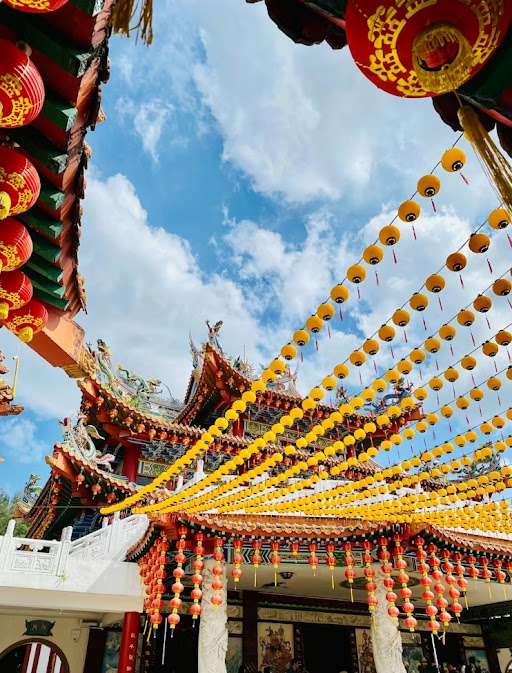
Thean Hou Temple is one of the largest and most beautiful Chinese temples in Southeast Asia, located in the heart of Kuala Lumpur. Dedicated to the sea goddess Mazu (Thean Hou), the temple reflects the rich heritage and spiritual traditions of the Chinese community in Malaysia.
Built in 1987 and officially opened in 1989, the temple showcases stunning traditional Chinese architecture, with intricate carvings, red pillars, and a multi-tiered pagoda-style roof. It is a peaceful sanctuary where visitors come to pray, seek blessings, and experience tranquility away from the city’s fast pace.
Beyond its religious significance, Thean Hou Temple is also a cultural hub. It hosts vibrant celebrations during festivals like Chinese New Year and Mid-Autumn Festival, attracting both locals and tourists. The temple grounds offer panoramic views of Kuala Lumpur, making it a popular spot for photography and sightseeing.